Resource

Resource

Pregnancy at sea: From hidden risk to retention edge

Pregnancy is not an exceptional event; it is a normal part of working life that companies should be prepared for. At sea, however, its handling is still largely improvised. 

Fifteen women of eight nationalities, working across six vessel types and ranks from cadet to master, shared their experiences of pregnancy at sea. Their stories revealed a consistent pattern: what should be a routine, manageable process is often left to chance.

Find out more
Resource

Seafarers' Bulletin 2025

As we leave 2024 behind, it is distressing that seafarers continue to be affected by conflict. Seafarers’ bulletin takes a look at the impact of Houthi attacks on merchant vessels in the Red Sea and reiterates the ITF’s call for greater protections for seafarers. And we hear how the MTWTU in Ukraine is assisting its members and their families nearly three years after the Russian invasion.

Find out more
Resource

Building a Respectful Maritime Workplace

MM&P has drawn on guidance developed by a variety of organizations including labor unions, government groups and non-profits. Where relevant, the sources of the material are identified and links are provided.

The main goals of this pamphlet are to:

- inform members about the work MM&P is doing to tackle bullying, harassment and discrimination in the maritime workplace;

-educate members on what constitutes bullying, harassment and discrimination, and how to identify whether they are being bullied, harassed or discriminated against;

-advise members on what they can do about bullying and harassment and explain how MM&P can help;

-connect members to resources and support offered by experts.

Find out more
Resource

How to be an ally

A sense of allyship is essential for all seafarers; however, one group for whom allyship can be particularly valuable is women seafarers who, especially on merchant vessels, regularly experience being the only woman on their vessel or team. More than any other group, women seafarers report experiencing harmful onboard behaviours including abuse, bullying, harassment, discrimination and violence (ABHDV) – including sexual violence. They are often treated as less knowledgeable or competent than they are, passed over or ignored for opportunities they have earned, and subjected to inappropriate remarks and attempts at humour that can leave them feeling excluded or uncomfortable.

ISWAN has produced a resource for seafarers on allyship to provide information and guidance on the actions that seafarers can take – both small and large – to directly support each other and promote fairness and equity at sea. This companion resource explores the steps that maritime stakeholders can take to foster a culture of allyship and thereby help to make the maritime sector a safe and inclusive space for all.

There are two versions available for download, one for seafarers and the other for maritime stakeholders. Use the drop-down menu shown right to select.

Find out more
Resource

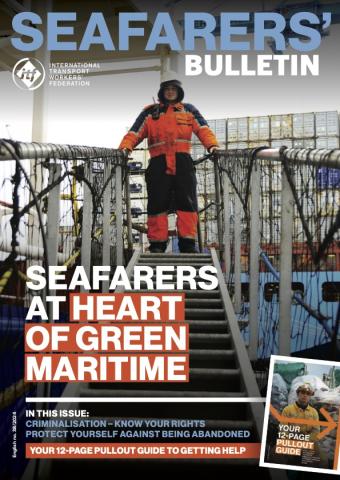
Seafarers' Bulletin 2024

Seafarers are at the heart of greening the maritime industry. The challenge for the ITF and its affiliated seafarer unions is making sure that there is a just transition which protects seafarers’ labour rights and working conditions while skilling them for the jobs of the future. Seafarers’ bulletin looks at the opportunities this provides for seafarer supply countries. It also examines how the industry has to change.

Find out more
Resource

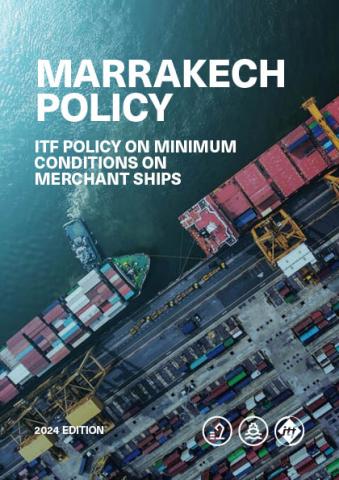
Marrakech Policy

The ‘Marrakech Policy’, adopted at the International Transport Workers’ Federation’s (ITF) 46th Congress in Marrakech, Morocco, in October 2024, now forms the governing framework for the global union’s campaigning work on Flags of Convenience (FOC). 

The policy is the culmination of five years’ work by union representatives from ITF maritime affiliates to examine, plan and develop a new strategy in line with the shifting reality faced by seafarers since 2010 – when the preceding Mexico City Policy was adopted at the ITF’s 42nd Congress in Mexico City.

The Marrakech Policy, adopted by the Joint Seafarers’ and Dockers’ conference, sets out the minimum conditions the ITF and its affiliated unions will accept on FOC merchant ships. In doing so, it incorporates the new understanding of the critical importance of global supply chains that emerged out of the Covid-19 pandemic, as well as the central role for shipping and seafarers in combatting climate change through a just transition.

The Marrakech Policy will now form the baseline for the ITF’s Collective Bargaining Agreements (CBA), which set the wages and working conditions for crews on FOC vessels, irrespective of nationality.

Find out more
Resource

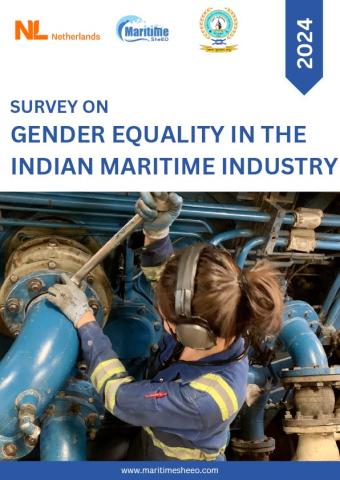
Gender Equality in the Indian Maritime Industry

Acknowledging the significant contributions of women in enhancing diversity and innovation, this study examines the current state of gender equality within the Indian maritime sector. By exploring the perspectives and experiences of employers, onshore employees, and seafarers, this research aims to highlight progress made and identify opportunities for further advancement.

Find out more
Resource

Harassment at Sea, SIU Survey

The Seafarers’ International Union of Canada decided that surveying our membership regarding the issue of harassment was a necessary step in addressing these problems that unfortunately exist on board seagoing vessels across the country, impacting tens of thousands of hardworking seafarers. Harassment has been a known issue in the industry for quite some time and the SIU Canada made the decision to take the first step in trying to grasp the severity and scope of the issue among our membership, after similar action was taken by our friends with the Norwegian Seafarers’ Union. We thank the Norwegian Seafarers’ Union for leading the charge globally on confronting these problems.

Find out more