ILO Minimum Wage 1 January 2024 Consolidated Interpretation
Using Joint ITF/ISF Interpretation of the ILO Recommended Minimum Wage for an AB - extrapolated on basis of ITF Standard Agreement Differentials
Rates applicable from 1st January 2024
Using Joint ITF/ISF Interpretation of the ILO Recommended Minimum Wage for an AB - extrapolated on basis of ITF Standard Agreement Differentials
Rates applicable from 1st January 2024
IBF list of designated risk areas, with applicable benefits.
Updated 23 November 2025
Policy guidelines governing the approval of ITF acceptable CBA’s for cruise ships flying flags of convenience
This “Miami Guidelines policy” revises the 1994 guidelines governing the approval of ITF acceptable agreements for cruise ships flying flags of convenience only. The cruise industry has developed a unique operational system which substantially differs from other maritime transport systems. These guidelines reflect the distinctive nature of the cruise industry and set out the instruments for the ITF affiliates signing acceptable ITF cruise agreements.
This Collective Bargaining Agreement (CBA), (hereinafter the “Agreement”) sets out the standard terms and conditions applicable to all Seafarers serving on any ship of which there is in existence a Special Agreement made between International Transport Workers’ Federation (hereinafter the “ITF”) and the owner or operator (hereinafter the “Company”).
Updated: 6 November 2023
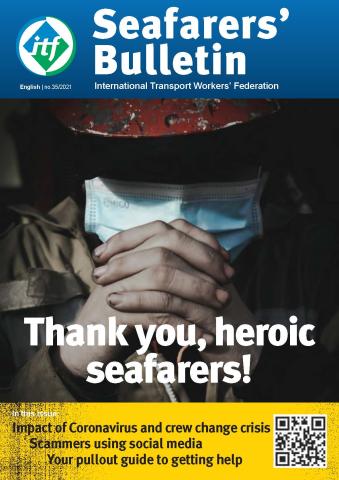
In this edition of the Seafarers’ bulletin, we report on these national and global efforts by the ITF and its family of unions, and examine how the virus has affected the global maritime industry.
There have been over 100 million cases of Coronavirus (COVID-19) and more than two million COVID-19 deaths recorded worldwide. To date, nearly 200 million people have received one dose of the COVID-19 vaccine.
How Covid-19 corner-cutting places too much risk in the international shipping system.
The Maritime Labour Convention, 2006 (MLC), otherwise known as the Seafarers’ Bill of Rights, incorporates and builds on sixty eight existing maritime labour conventions and recommendations, as well as more general fundamental principles, to ensure decent working and living conditions for all seafarers.