Abandoned Seafarers
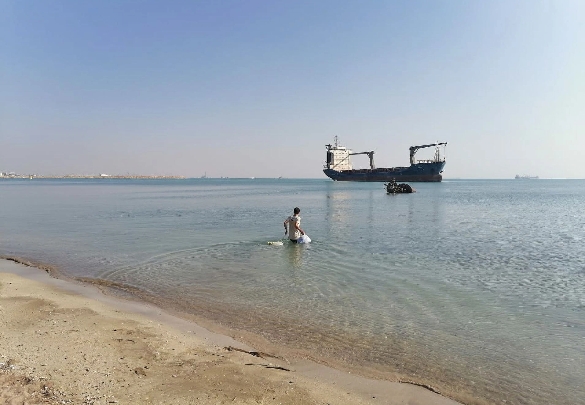
Abandonment happens when shipowners refuse to accept their responsibilities to support the crews on their vessels.
Seafarers move the world, sustaining our economies and communities – but they routinely face exploitation. The ITF fights for seafarers’ rights.
Abandonment happens when shipowners refuse to accept their responsibilities to support the crews on their vessels.
The Seafarers’ International Union of Canada decided that surveying our membership regarding the issue of harassment was a necessary step in addressing these problems that unfortunately exist on board seagoing vessels across the country, impacting tens of thousands of hardworking seafarers. Harassment has been a known issue in the industry for quite some time and the SIU Canada made the decision to take the first step in trying to grasp the severity and scope of the issue among our membership, after similar action was taken by our friends with the Norwegian Seafarers’ Union. We thank the Norwegian Seafarers’ Union for leading the charge globally on confronting these problems.
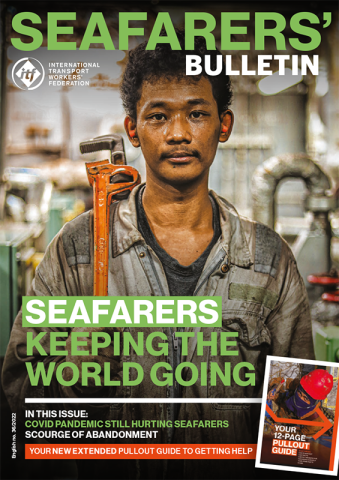
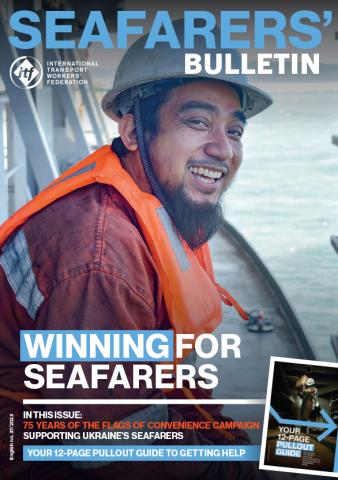
This issue of Seafarers’ bulletin marks the 75th anniversary of the ITF’s campaign against flags of convenience. Thanks to our efforts, this discredited system is firmly on the international agenda. We show what FOCs really mean for seafarers, and we celebrate the wins achieved for seafarers by our inspectors, working with our affiliated unions.
This IBF Agreement is based on the IBF Framework CBA which sets out the standard terms and conditions applicable only to seafarers serving on any ship owned or operated by a company in membership with the Joint Negotiating Group in respect of which there is in existence an IBF Special Agreement. Together with the IBF Special Agreement and the IBF Memorandum of Agreement, which may contain additional terms and conditions relevant to seafarers, the IBF Framework CBA makes an integral part of the general IBF settlement negotiated between the International Transport Workers Federation (ITF) and the Joint Negotiating Group (JNG) of maritime employers.
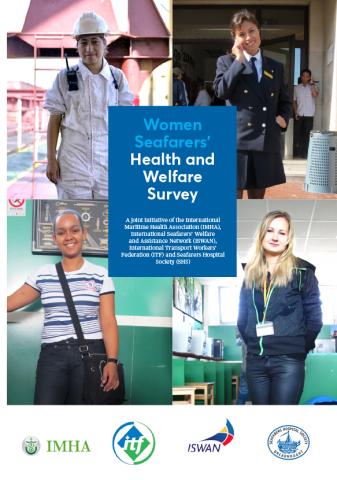
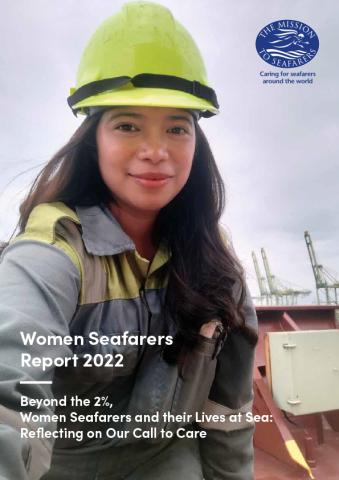
After recognising this possible gap in available health information and provisions which address health issues specific to women seafarers, representatives from IMHA, ISWAN, ITF and SHS designed an online pilot survey to find out how women currently working at sea view their health needs. This was conducted from the beginning of June 2014 for two months and was completed by 100 respondents.
Norwegian Seafarers' Union examine the incidence and extent of bullying/harassment and sexual harassment among the union’s members. A quantative online survey was sent to members. Also available to download are follow up in-depth interviews.
The ITF's ILO C190: A Transport Workers' Toolkit is a tool for transport unions that supplements the joint GUFs toolkit launched in June 2021. The toolkit is a useful tool for unions to build action and awareness using a set of briefings on issues that affect transport workers most significantly and how unions can identify targets and allies to strengthen their campaigns. Each briefing looks at understanding the issue and its importance for transport workers, what C190 can do to help, and activities to encourage union action.
Includes a guide to what the flags of convenience system really means for seafarers. We look at some cases of abandonment, where the FOC system gets in the way of seafarers winning unpaid wages and being repatriated. And we look at some examples of how the system delays justice when seafarers are caught up in criminal investigations.
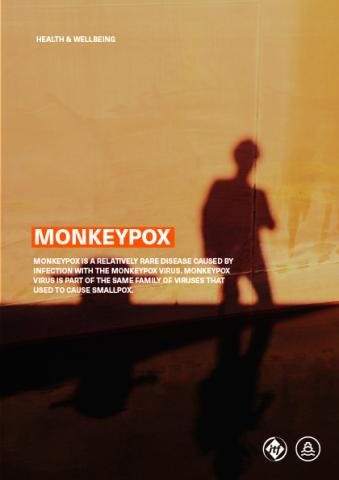
Monkeypox is a relatively rare disease caused by infection with the monkeypox virus.
Landmark event for seafarers opens, Indian Government announces new support for seafarers
The International Transport Workers’ Federation, alongside maritime unions from India, is bringing a major international seafarers’ event to India with the 2026 ITF Seafarers’ Expo, taking place th
ITF data shows spiralling ship and seafarer abandonment at worst ever levels - Indian seafarers worst affected with more than 1,000 abandoned out of a total of more than 6,000 abandoned sea